Bachelor of Arts · Full-time · On Campus
Utrecht University
Utrecht, Netherlands
To study in the Netherlands as a non-EU student, you apply for your programme through Studielink, pay the university's institutional tuition fee, and let the university apply for your residence permit. Bachelor's applications close on 1 May, or on 15 January for programmes with a numerus fixus (a cap on places). In 2026/27 the institutional fees at Erasmus University Rotterdam, the University of Twente and the University of Groningen run from €13,500 to €32,200 a year. The immigration service (IND) expects students to have €1,130.77 a month in 2026.
The statutory fee of €2,694 that you see quoted everywhere applies to EU/EEA, Swiss and Surinamese students and a few groups of permit holders, not to most students from India, Africa, the Middle East or the US. The sections below answer the questions students ask most, using the IND, the education agency DUO, Studielink and the universities' own 2026/27 pages, checked in November 2026.

No. Higher education in the Netherlands is not free for anyone, and non-EU students usually pay much more than Dutch students. There are two fee levels:
If you think you might fall into one of the exceptions, ask the university's admissions or immigration desk before you apply: the difference is often more than €10,000 a year.
Institutional fees differ by university, by degree level and by faculty. These are the full-time, non-EU/EEA fees each university publishes for 2026/27:
Erasmus University Rotterdam, bachelor's
Erasmus University Rotterdam, master's
University of Twente, master's
University of Groningen, master's
Two things follow from this. At Erasmus, a bachelor's in most faculties costs €7,500 a year less than a master's in the same faculty. And engineering, science and medicine sit at the top of each university's scale. Erasmus also notes a transitional rate of €11,700 for non-EEA bachelor's students who started in 2025/26 and re-enrol without a break, so fees can change between your first and later years: check the fee page for every year of your course.

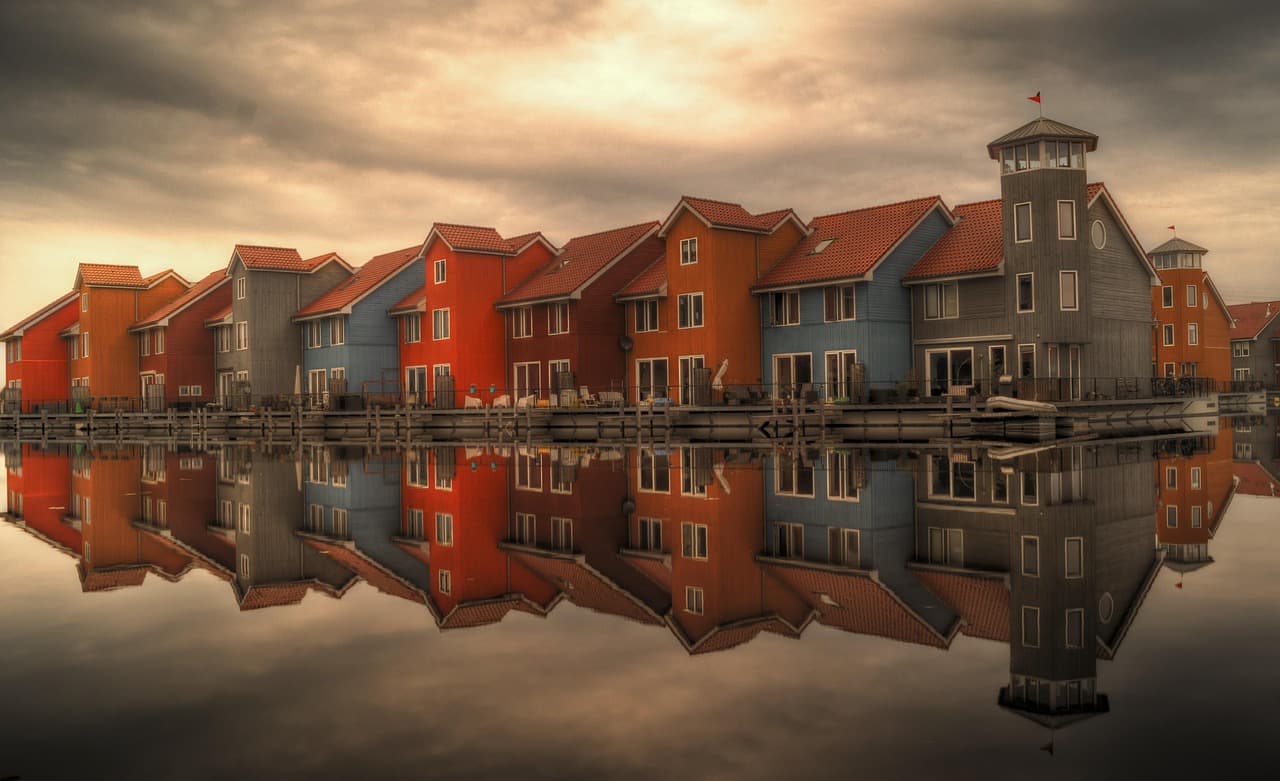
Photo: JoachimKohler-HB, CC BY-SA 4.0, via Wikimedia Commons
At some universities, yes. The University of Groningen accepts the All India Senior School Certificate of the CBSE for its bachelor's programmes if you have at least five externally examined courses with a grade of A1, A2 or B1 in all five. Courses that are not externally examined, such as Work Experience or General Studies, do not count. Many programmes then add subject requirements:
An Indian school certificate does not exempt you from an English test at Groningen. The exemption list covers qualifications such as the IB with English as medium of instruction, A-levels, or schooling in the US, UK, Ireland, Australia, New Zealand or English-speaking Canada. For 2026/27 most faculties ask for IELTS Academic 6.5 overall, with Economics and Business at 6.0 and Law at 7.0. IELTS Online and the One Skill Retake are not accepted, and IELTS, TOEFL, PTE and LanguageCert results are valid for two years.
Other universities publish their own country lists, so look up your board (CBSE, ISC, a state board, WAEC, or your national secondary certificate) on each university's entry requirements page. Dutch universities grade on a 1 to 10 scale; our guide on what a good GPA is explains why a 7 is a solid Dutch grade.
Bachelor's applications at Dutch universities start in Studielink, the national enrolment system. The order is:
Master's deadlines are set by each university and programme, so take them from the programme page.
You do not apply for the permit yourself. Only a recognised sponsor, in practice your university, can apply to the IND for your student residence permit. According to the IND:
The IND says it usually decides within two weeks of an institution's application, so the timing mostly depends on how early you finish the university's steps.

Yes, within limits. On a student permit you choose either up to 16 hours of paid work a week, or full-time work in June, July and August. Your employer must get a work permit (TWV) for you from the employment agency UWV. Internships that are part of your programme do not need a TWV. Self-employed work does not need one either, but you must register with the Chamber of Commerce and pay tax.
Plan your budget without counting on part-time income: 16 hours a week does not cover an institutional fee, and the IND funds requirement must be met before you arrive.
Not straight away, but there are clear steps.
For immigration purposes, it clears the bar if you use the reduced criterion. €50,000 a year paid over 12 months is €4,166.67 gross a month, well above the €3,122 reduced criterion for recent graduates. For someone aged 30 or older applying without the reduced criterion, it is below the €5,942 threshold.
The Dutch government's Balanced Internationalisation Act (Wet internationalisering in balans) is still a bill, not law. The University of Twente reported in February 2026 that the revised bill had been sent to the Council of State for advice, that the language test now applies only to new programmes, and that the bill also aims at programme-specific enrolment caps. Some universities have already moved tracks to Dutch: Twente's Psychology bachelor's, for example, is now taught in Dutch. Before you apply, check on the programme page that it is taught in English for your intake year and whether it caps international places.
Checklist for a 2027 start: (1) check the programme is taught in English and whether it has a numerus fixus; (2) check your school certificate on the university's country page; (3) book IELTS Academic (not IELTS Online); (4) enrol in Studielink by 15 January (numerus fixus) or 1 May (other bachelor's); (5) budget the institutional fee plus €1,130.77 a month (IND, 2026 amount); (6) let the university file the MVV and residence permit; (7) plan for 50% of credits each year.
Stuudy's ranking of the best universities in the Netherlands uses EduRank. In its world ranking the University of Amsterdam is #76, Utrecht University #78, the University of Groningen #118, TU Delft #137, Leiden University #158 and Erasmus University Rotterdam #231. The Netherlands country page brings together universities, cities and programmes, and the programmes below are two bachelor's options listed on Stuudy.
Bachelor of Arts · Full-time · On Campus
Utrecht University
Utrecht, Netherlands
Bachelor of Science · Full-time · On Campus
Maastricht University
Maastricht, Netherlands
When you have a shortlist, follow our step-by-step guide on how to apply to put your documents together before the 15 January and 1 May deadlines.